How to Select the Best Investment in the Philippines for Beginners
Key takeaways:
- Beginners should start with low-risk assets like bonds or savings programs.
- Investments like Pag-IBIG MP2 and government bonds start at as low as Php 500.
- Certain investments like MP2 and SSS WISP Plus offer tax-free returns.
- Investing in property provides a hedge against inflation and potential for rental income.
- Avoid platforms or schemes promising unrealistic returns, as they may be fraudulent.




Table of Contents

Many people associate investing funds with complex financial processes. However, don’t think that only professionals with a lot of experience can get a good profit. Everyone can learn to invest their own money profitably. The main thing is to understand the basic processes and determine where it is better to invest money.
What Is Investing and Why Is It Important?
Investing is putting money into assets to earn a return. Assets can be disposed of and bring benefits. Real estate, business, precious metals, currency, and money on deposits or unallocated metal accounts are different types of assets.
The essence of investing comes down to buying an asset cheaper and selling it more expensive. For example, a person can invest in shares in a company — and sell them when they increase in price.
There are many reasons for investing. Let us focus on the main ones:
- To grow capital. One of the key purposes of investing is to grow your capital. People put money into assets or projects with the hope that their value will increase in the future, allowing them to make a profit by selling these assets and projects.
- To increase income. Some investments involve earning income through dividends, interest, or rent. For example, owners of shares can receive dividends from the company’s profits, and property owners can rent it out and receive a regular income.
- To protect savings from inflation. Putting money into investments helps people to preserve its value in the face of inflation. For example, owning stocks or gold can be a way to protect yourself against a decline in the purchasing power of money.
- To spread risks. Investments allow you to diversify your risks by investing in different assets or companies. If one investment fails, other investments can help mitigate losses.
- To fund projects. Investments are a source of additional capital for entrepreneurs who can use these funds to develop their businesses, innovate, or launch new products and services.
How Much Money to Invest
The amount you need to invest depends on your financial capacity and investment objectives. There is no fixed minimum amount you need to have to start investing. Some people start with a few hundred Philippine pesos.
There are many opportunities to invest small amounts in the Philippines, and we will discuss them in the next part of our article. However, having enough funds to create a diverse portfolio to minimize risks is advisable. You can start with small amounts and gradually increase your investment as your capital grows.
However, you need to ensure that you also have enough money to cover your current expenses and create a financial cushion in case of unexpected expenses. You should only invest some of your savings to avoid problems in case of unforeseen circumstances.
Best Investments in the Philippines for Beginners 2025
Popular investment instruments can bring stable returns even to beginners. For example, a novice investor can invest in dividend shares, debt securities of reliable issuers, real estate, or investment life insurance.
Let’s look at the best investment in the Philippines for beginners in 2025.
- Only 1 valid is ID needed to apply
- Fast approval in 5 minutes
- First loan with 0% interest rate *

(*) Digido Тerms and Conditions Apply
📈 SSS WISP Plus/Pag-IBIG MP2
SSS WISP Plus and Pag-IBIG MP2 are government-backed savings programs in the Philippines. They are designed to provide additional financial security and investment options for members of the Social Security System (SSS) and the Pag-IBIG Fund, respectively.
The Workers’ Investment and Savings Program (WISP) Plus is a voluntary retirement savings initiative for SSS members that allows them to save and invest in a low-cost, tax-free plan. It serves as an additional layer of social security on top of regular SSS benefits.
The Modified Pag-IBIG II (MP2) is a special savings facility for Pag-IBIG Fund members, including retirees and pensioners. It aims to help members save more while earning higher dividends than the regular Pag-IBIG savings.
This type of investment is now among the most common in the Philippines. This is not surprising, as investing in government pension programmes has many advantages: they are affordable for beginners (from Php 500), MP2 and WISP income is tax-free, and the country’s authorities guarantee their payments.
📈 Digital Banks
Thanks to the rapid development of digital banks, opening a savings account in the Philippines can now be done in minutes. Many people prefer to keep their savings on deposit, earning interest. The amount depends on which bank you choose, how much money you deposit, and for how long. For example, in Maya Bank (formerly PayMaya), the rate ranges from 3.5% to 15% depending on specific conditions like maintaining a higher balance or participating in promotions. Other digital banks, such as Tonik and CIMB, offer competitive rates as well, with Tonik’s time deposit accounts reaching up to 6% per annum, making it a favorite among savers looking for short- to medium-term growth.
These banks stand out for their accessibility and ease of use. Account opening is fully digital, requiring only a smartphone and a few documents for verification. Once set up, users can monitor their savings, transfer funds, and even set savings goals directly within the app. Unlike traditional banks, digital banks eliminate most fees, such as maintaining balance penalties, making them ideal for those just starting to save or invest.
Beyond savings, digital banks are integrating features like investment options, budgeting tools, and cashback rewards, encouraging users to build better financial habits. For first-time investors in the Philippines, digital banks provide a gateway to financial security and growth with minimal barriers.
📈 Government Bonds
This type of asset is considered one of the most stable and low-risk, so it is perfect for beginners. By buying bonds, you lend money to the government, which pays you interest for your investment. The cost of bonds starts at 500 Php. Traditionally, this asset type is even safer than stocks, but putting all your money into bonds alone is not recommended. Remember to diversify your assets.

📈 Stocks via Online Platforms
Online platforms allow people to invest in different assets: stocks, mutual funds, bonds, cryptocurrencies, etc. Stocks are bought through such platforms. This is convenient; you only need to log on to the website or install the service’s mobile app, select the desired assets, and buy them.
Here are the most popular online platforms for investing in the Philippines for beginners in 2025:
- First Metro Securities. The minimum initial deposit is Php 2.500.
- COL Financial. Investments from Php 5.000.
- GCash. From Php 50 for shares of local companies.
- Maya. From Php 50.
- DragonFi. The minimum deposit is Php 1.000.
📈 Mutual Funds
This type of asset is considered very good for those who are new to investing because when you invest in these funds, you get a ready-made portfolio of bonds, stocks, and other types of assets that are managed by professional investors — in the Philippines, these are insurance and brokerage companies. This allows you to reduce the risk of losing money and get access to different financial instruments.
📈 Real Estate
People often invest money in property to prevent it from depreciating due to inflation. Investors purchase commercial, residential, budget, and elite premises that will not decrease in price. Buying commercial properties in places with high footfall and residential properties in areas with developing infrastructure is better.
There is always a demand for property so that it can be profitably resold or rented out and earn passive income. Not all novice investors are suitable for this type of asset, as much money is needed to buy real estate.
📈 Variable Unit-Linked Life Insurance (VUL)
By choosing VUL, you get investment and life insurance in one asset. This is especially convenient for beginners as it invests your money in assets managed by a professional fund manager. He will manage your investments and make wise decisions on where to invest your money so that it makes a profit. On top of that, you also get a life insurance policy.
The cost of investing depends on which financial company you entrust your money to.
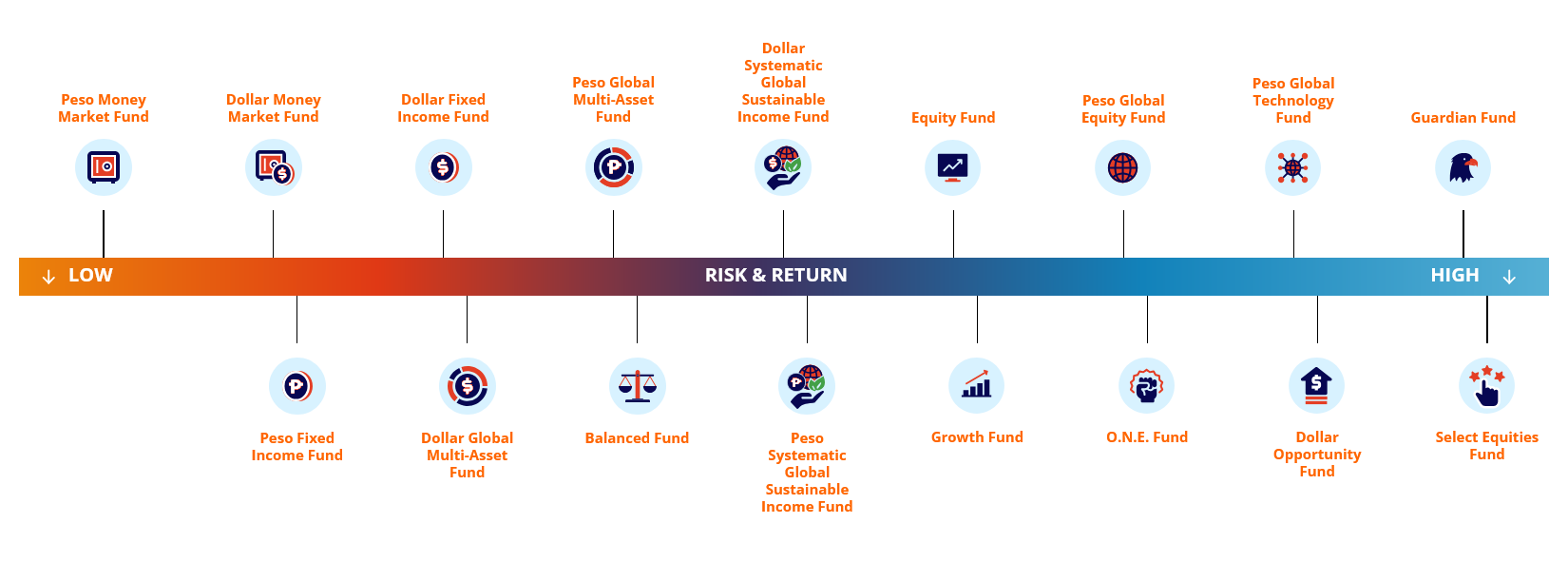
There are two types of VUL policies:
- Single-payment. This means that you will only pay for the policy once. Usually, the price of such a policy starts at 100,000 Php.
- Regular installments. Here, the entire policy amount is spread over several years.
📈 Unit Investment Trust Funds (UITFs)
The UITF is another good investment for newcomers. By investing in the fund, they get a fully diversified portfolio that professionals have put together. Such funds work the same way as mutual funds, but unlike them, they are managed by banks.
| Type of investment | Pros | Cons |
|---|---|---|
| SSS WISP Plus |
|
|
| Pag-IBIG MP2 |
|
|
| Digital Banks |
|
|
| Government Bonds |
|
|
| Stocks via Online Platforms |
|
|
| Mutual Funds |
|
|
| Real Estate |
|
|
| Variable Unit-Linked Life Insurance (VUL) |
|
|
| Unit Investment Trust Funds (UITFs) |
|
|
Do you need money that you can get fast? Get up to ₱25,000 in just 4 minutes with Digido online loan. Apply with only one valid ID:
* Interest payments are approximate. The final loan amount and interest rate must be confirmed in your loan agreement after loan approval.

How to Invest with Little Funds in the Philippines
If you have a small amount of money to spare but are still hesitant to invest, use our guide, and you will do well.
Step 1: Set Clear Financial Goals
The goal will help you determine your investment strategy and tools. It could be:
- Long-term — to build up capital for a comfortable life in retirement, to receive passive income
- Short-term — to save money for education or a large purchase: a car or a flat.
- Vague — to earn money to start your own business.
- Specific — to save for a flat in three years.
To formulate a goal, answer these questions for yourself:
- Why do you invest?
- What kind of income do you want to receive?
- When will you need this income?
- How much can you invest now?
- How much are you willing to invest each month?
Step 2: Choose an Investment Platform
It is very important to find a truly reliable investment platform. Do not trust the advertisements of services that promise to increase your investments by several tens or hundreds of times in a short time. Such offers hide behind fraudsters who will likely keep your money for themselves.
The choice of platform depends on what kind of investments you want to make: stocks, bonds, or mutual funds. Study the offers of well-known services and see what commissions they charge. Read reviews of your favourite platform to ensure your money is safe.
Step 3: Start Small with a Low-Risk Investment
Experienced investors do not advise beginners to invest money immediately in high-risk assets. Start with investments you understand, such as stocks, bonds, or mutual funds. Pay attention to pension programs from the state or insurance investment policies.
All these assets do not promise high returns, but they do guarantee that your investments will bring you a return, albeit not a very high one. Only after you understand the ins and outs of investing can you invest in more financial products that promise high returns.
In any case, remember diversification: your investment portfolio should contain different assets.
Step 4: Monitor Your Investments
Constantly monitor your investments. How has the market situation changed? What is happening in the economy? If one of your assets is falling badly, it may be better to sell it. However, take your time. Very often, newcomers to investing lose money because they panic and get rid of stocks that later bring good profits to more patient people.
Step 5: Continue Learning and Monitoring
It is worth learning about investments and their risks to get an idea of how to work with financial assets. You can learn the terms and principles of working with securities and the main types of investments on your own or seek professional advice. The main thing is to understand all the nuances of working with selected groups of assets. This will take time.
Remember that the situation in different market segments is constantly changing, so even after training, you must follow the news concerning the selected investment instruments and areas. This will help you adjust your strategy in time and avoid losing money.

Tips for Beginners: How to Minimize Risks
Many people start their investing journey with the desire to make a lot of money quickly. This approach pushes novice investors into risky decisions when they have no financial safety cushion yet. In most cases, such stories result in the loss of the entire start-up capital.
It is important to realize that investing is not about luck; it is about planning and handling risks wisely. Follow our advice, and then you will succeed:
- Set your investment goals. Determine what goal you want to achieve with your investments. This could be buying a car or property, creating a pension fund, saving for your children’s education, etc. This will help you determine the amount of optimal investment income.
- Diversify investments. Develop an allocation strategy for your investments. Diversify your portfolio by investing in different assets based on your financial objective and risk tolerance. Concentrating all your resources on one investment can result in significant losses if that asset does not meet expectations.
- Avoid “get rich quick” schemes. The desire to get rich quickly often leads to rash decisions and risks. Beginners often believe that trading stocks can earn 50%, 100% and even 500% per year of the invested amount. In fact, a return of 30% per annum already implies a high level of risk. Therefore, setting yourself up for gradual growth over at least 6–12 years is better.
- Build an emergency fund before investing. Before you start investing, you should take care to create a financial safety cushion. This is necessary so that in force-majeure situations, you can cover all mandatory expenses without drawing on invested funds. The optimal size of a financial safety cushion is individual and depends on personal capabilities and goals. Creating a cash reserve equal to the average expenses of an individual or a family is recommended for 6–9 months.
- Invest regularly. One of the keys to successful investing is regularity. You should not expect large returns from one-off investments. It is better to invest money in assets with a certain periodicity, for example, once a month after receiving your salary. These amounts may be small, but they will bring tangible profits in the future due to their regularity.
- Educate yourself continuously. To invest successfully, you need to know the basics of investing, understand different types of assets, markets, and strategies, and be able to calculate projected returns. You can watch videos on YouTube, read books, and participate in thematic seminars. If you plan to become a professional investor, complete investor courses offered at online schools. The more you know about the market, the more informed your investment decisions will be.
Conclusion
Some Filipinos fear investing because they think it is only for rich people. You can invest any amount of money; the main thing is to choose the right asset and study its features. To not lose money, you need to examine the rules of working with different financial assets, make a competent investment strategy, and stick to it without giving in to emotions. This approach will allow you to receive a good passive income in the long term.
Investment for beginner in the Philippines: FAQ
-
What is the most suitable investment for beginners in the Philippines?A beginner's choice of investment depends on their financial capabilities. For example, you don't need to have much money or the knowledge of a professional investor to buy stocks or bonds. However, investing in property requires a substantial amount of money.
-
How much money do I need to start investing?All you need to buy shares in local companies is to have at least Php 50.
-
Can I invest if I don’t have a large amount of savings?It is better to start investing with a reserve of money for unforeseen circumstances. How big it should be depends on your needs. However, if you do decide to invest without savings, look for low-risk assets.
-
What to look for when choosing an online investment platform?Read reviews of the service and check the website for the commission amount for services and the minimum initial deposit amount.
-
Am I sure I won't lose money on my investment?It all depends on the asset you’ve invested in. If you listened to promises and selected dubious shares, losses are inevitable. Choosing proven assets: funds, bonds, or pension programs is better. They are managed by institutions whose work is monitored by the state.
-
Do I have to pay tax on my investments?Yes, the government levies capital gains tax on asset sale, exchange, or disposal of assets.
-
How much can I earn from investments?It all depends on how much and where you’ve invested. For example, bank deposits allow you to earn, on average, from 5% to 14% per annum.
-
What part of the salary is best to invest?It is usually recommended to invest at least 10% of your income; the main thing is to do it regularly.
Authors

Download our app
- Borrowing 24/7
- Approval rate over 90%
- 1 Valid ID