How Much Do Tuition Fees in the Philippines Cost: Public vs Private Education




Table of Contents

For many parents, the cost of education in the Philippines feels like a never-ending burden. From the moment their child enters school, the expenses start piling up—tuition fees, books, uniforms, and extracurricular activities. The pressure to keep up with these rising costs often leads to sleepless nights, as parents wonder how they’ll make ends meet without compromising their child’s future.
With so many options, from private schools to public universities, it can be overwhelming to figure out what’s best for your child—and what’s the most affordable.
In this article, we break down the typical tuition fees across different educational levels—grade school, high school and college–and offer strategies to help make this essential investment more manageable for you and your family.
Understanding the Philippine Education System
For many parents today, the Philippine education system might feel a bit unfamiliar. That’s because, in 2012, the government introduced the K-12 program, adding two extra years to basic education. It’s important to understand why this shift happened.
Here’s why the old system needed an update:
- Limited time for skill development: With only 10 years of basic education, students didn’t have enough time to dive deep into specialized subjects. This was especially crucial in the years leading up to college, where more focused learning is needed.
- Mismatch with global standards: One of the main reasons for the change was that many Filipino graduates found themselves at a disadvantage compared to students from other countries. Most countries had a 12-year basic education system, so our 10-year program put Filipino graduates behind when it came to competing for jobs or pursuing higher education abroad.
Now, let’s take a closer look at how the education system is structured today:
Basic Education
- Pre-Primary (Kindergarten)
Children start their formal education with one year of kindergarten before entering elementary school. This prepares them for the academic challenges of primary school.
- Primary Education (Grades 1-6)
The first six years of school, covering elementary education, where students learn foundational skills in subjects like math, science, reading, and writing.
- Secondary Education
a) Junior High School (Grades 7-10)
These are the traditional “high school” years, where students continue to build on the basics while exploring subjects like history, literature, and the arts.
b) Senior High School (Grades 11-12)
This is the newest addition, introduced in 2012, which gives students the option to choose between different tracks, like:
- STEM (Science, Technology, Engineering, and Mathematics)
- ABM (Accountancy, Business, and Management)
- HUMSS (Humanities and Social Sciences)
- TVL (Technical-Vocational-Livelihood).
Learn more about:
What is Early Childhood Education in the Philippines and Why Your Child Needs It
Higher Education
- Tertiary Education
Once students finish senior high, they can move on to universities or colleges to pursue undergraduate or postgraduate degrees. Depending on their chosen career path, this is where they specialize even further and prepare for their future careers.
- Only 1 valid ID needed to apply
- Fast approval in 5 minutes
- 0% interest for first loan*

(*) Digido Тerms and Conditions Apply
Public vs. Private Education in the Philippines
Choosing between public and private schools is a dilemma that many Filipino parents face. It’s a big decision, and understanding the pros and cons of each option can make it a bit easier. Let’s break it down:
Public Education
- Affordable (or free)
The main attraction of public schools is that there are no tuition fees, making them a more affordable option for families. Most other basic fees are also kept low, making it accessible for many. - Government-Standardized Curriculum
Public schools follow the DepEd’s official curriculum, which ensures that students across the country are learning the same subjects and skills, no matter where they’re from. - Large Class Sizes
Public schools often have larger class sizes, which can make it harder for teachers to give individual attention. This can sometimes affect how well students grasp certain subjects. - Limited Facilities and Resources
Due to budget constraints, public schools may not always have the latest facilities or educational tools. While some schools are better equipped than others, there can be a lack of specialized classrooms or updated resources.
Private Education
- Smaller Class Sizes
One big advantage of private schools is the smaller class sizes, which means teachers can give more personalized attention to each student. This can help students who need extra support or want to take their learning further. - Specialized Programs and Facilities
Many private schools offer specialized programs in areas like arts, sciences, or sports, and they often have better facilities, such as updated technology and sports equipment, which can enhance their learning experience. - Higher Tuition Fees
The main drawback of private schools is the cost. Tuition can be expensive, and there may also be additional fees for uniforms, extracurricular activities, and materials. - Stronger Network and Alumni Support
Private schools often have strong alumni networks, which can provide valuable connections for students later in life. They also tend to emphasize developing leadership, character, and other skills alongside academics.
Choosing Between Public and Private Schools
For School Year 2024-2025, the Department of Education (DepEd) reports that more than 23 million students are enrolled in elementary to senior high school. Of those, about 20.9 million are in public schools, while 2.7 million are in private schools. (1)
Despite the clear advantages of private schools, public schools continue to be the backbone of Filipino education. The government has been investing in public education to close the gap, with new policies aimed at upgrading school facilities and increasing teacher salaries.
That said, the gap in resources and infrastructure still exists.
Deciding between public and private schools is a balancing act: Is the higher cost of private education worth the potential academic benefits, or is the more affordable public school option enough for their child’s future? It’s not an easy decision, but for parents, it’s crucial to consider their child’s specific needs, the quality of the schools in their area, and what resources are available to them to make the best choice.
Average Annual Tuition Fees for 2025
Tuition fees can vary widely depending on the type of school and the level of education. Here’s a quick breakdown to help you understand what to expect for different school types and grade levels:
| School Level | School Type | Tuition Fees (Annual) | Miscellaneous Fees (Annual) | Additional Costs |
|---|---|---|---|---|
| Grade School | Private | ₱30,000 – ₱150,000 | ₱2,000 – ₱5,000 | School supplies, uniforms |
| Public | ₱0 (Minimal fees for public schools) | ₱2,000 – ₱5,000 | Activity fees, uniforms | |
| High School | Private | ₱50,000 – ₱150,000 | ₱3,000 – ₱10,000 | Uniforms, activity fees, books |
| Public | ₱0 (Tuition-free for public schools) | ₱3,000 – ₱8,000 | Miscellaneous activities | |
| College | Private | ₱100,000 – ₱250,000 | ₱10,000 – ₱40,000 | Lab fees (for certain courses), books, thesis fees |
| Public | ₱5,000 – ₱20,000 | ₱3,000 – ₱15,000 | Miscellaneous fees, lab fees |
Expenses can vary widely based on the type of school and the level of education. While private schools, especially the more prestigious ones, can have a broad range of tuition fees, public schools remain an accessible option with no tuition costs for basic education. However, even in public schools, there are some additional costs to consider, like extracurricular activities and uniforms.
For tertiary education, the Universal Access to Quality Tertiary Education Act (UAQTE) helps make college tuition fees more affordable for qualifying students by providing subsidies at state universities and colleges (2), reducing the financial burden for many families. Despite these subsidies, there are still additional fees like laboratory costs, books, and other supplies to keep in mind.
Grade School Tuition Fees
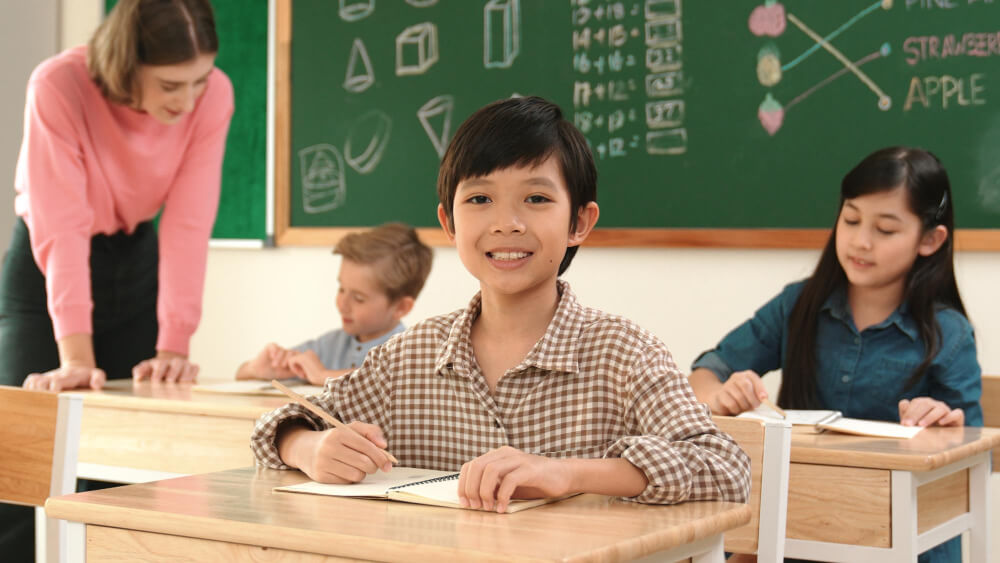
Primary education (Grades 1-6) is foundational in shaping a child’s academic journey, laying the groundwork for critical thinking, social development, and future learning. Let’s explore some of the top private schools for primary education in the Philippines:
1. St. Pedro Poveda College
Annual Tuition Fee: PHP 130,000 to PHP 200,000*
Formerly known as the Poveda Learning Centre, St. Pedro Poveda College is an all-girls Roman Catholic school. Apart from its strong academic programs, Poveda offers elective courses like robotics, digital arts, and biochemistry. It’s known for producing top-tier students in both academics and extracurriculars.
2. Colegio San Agustin (CSA)
Annual Tuition Fee: PHP 130,000 to PHP 200,000*
CSA is another Catholic institution that blends academics with a wide variety of extracurricular activities. The school has state-of-the-art facilities, from classrooms to sports and after-school activity areas. They also foster a diverse community, welcoming students from various backgrounds.
3. Xavier School
Annual Tuition Fee: PHP 230,000 to PHP 290,000*
Xavier School is a prestigious Jesuit school known for its strong academic foundation. They offer a comprehensive K-12 curriculum, but what sets them apart is their emphasis on sports, arts, and even their status as an International Baccalaureate (IB) World School. This gives students a chance to pursue the IB Diploma, which is a pretty big deal if you’re thinking about global opportunities.

High School Tuition Fees
High school (Grades 7-12) is a time when students start narrowing down their interests and deciding on the path they want to take in the future. Let’s take a closer look at some of the notable high schools in the Philippines, what they offer, and what you can expect in terms of tuition fees:
1. Philippine Science High School (Pisay)
Annual Tuition Fee: FREE
Pisay is one of the top public high schools in the Philippines, known for its research-driven approach and specialized STEM curriculum. It’s run by the Department of Science and Technology (DOST), and students here get the chance to take advanced, college-level courses. Admission is tough, with students selected through a competitive entrance exam. With campuses nationwide, Pisay provides an incredible, tuition-free education, along with a monthly stipend.
2. Miriam College
Annual Tuition Fee: PHP 150,000*
Miriam College is an all-girls school that has built a solid reputation for academic excellence and leadership. They take a well-rounded approach, combining top-notch education with a strong focus on women’s empowerment. On top of academics, students can get involved in all kinds of extracurriculars, from arts and sports to leadership training.
3. UP Integrated School (UPIS)
Annual Tuition Fee: PHP 5,000 to PHP 15,000*
As the laboratory school of the UP College of Education, UP Integrated School (UPIS) offers a challenging academic curriculum, focusing on developing critical thinking and research skills. It’s ideal for students who are thinking about pursuing higher education in UP but note that they only accept a limited number of students each year.

College Tuition Fees
College tuition fees are a big consideration for many families, often representing a major investment in a child’s future. Let’s explore some of the top universities in the Philippines to give you an idea of the costs and offerings:
1. University of the Philippines (UP)
Founded way back in 1908, UP is the national university of the Philippines and is widely regarded as the country’s top educational institution. It has a long history of producing influential leaders in politics, business, the arts, and beyond. UP has several campuses across the country, but the main one is located in Diliman, Quezon City.
UP offers a broad selection of undergraduate and graduate programs in various fields, such as social sciences, engineering, arts, law, medicine, and agriculture.
- Type: Public
- Semesters: 2 semesters per academic year
- Tuition Fee: Around ₱40,000 to ₱60,000 per year*
2. Ateneo de Manila University (ADMU)
Founded in 1859 by the Society of Jesus (the Jesuits), Ateneo’s campus in Quezon City serves as a vibrant hub for students from all walks of life, and its graduate programs attract professionals from various fields looking to level up their careers.
Ateneo is particularly well-known for its top-notch programs in business (through the Ateneo Graduate School of Business), law (Ateneo Law School), and arts and sciences. It’s also earned recognition in fields like psychology, communication, social sciences, and engineering.
- Type: Private
- Semesters: 2 semesters per academic year
- Tuition Fee: ₱75,000 to ₱130,000 per semester*
3. De La Salle University (DLSU)
DLSU, was founded in 1911 by the De La Salle Brothers and has since become known for its impressive research centers, strong community involvement, and vibrant campus life. Located in the heart of Manila, the university has earned a strong reputation for its programs in business administration, engineering, and computer science.
- Type: Private
- Semesters: 3 semesters per academic year
- Tuition Fee: ₱75,000 to ₱100,000 per semester*
4. University of Santo Tomas (UST)
Founded in 1611 by the Dominican Order, UST holds the title of being the oldest Catholic university in Asia. Its main campus is located in Manila, and it offers a wide variety of programs at both the undergraduate and graduate levels. It’s a popular choice for students interested in medicine, law, engineering, pharmacy, architecture, and arts and letters.
- Type: Private
- Semesters: 2 semesters per academic year
- Tuition Fee: ₱50,000 to ₱100,000 per semester*
4. Mapúa University
Mapúa was founded in 1925 as the Mapúa Institute of Technology and has evolved into one of the leading universities in the field of engineering and technology. The university focuses on science, technology, and innovation. Mapúa excels in engineering, particularly civil engineering, electronics engineering, and computer science.
- Type: Private
- Semesters: 3 semesters per academic year (previously quarterm system)
- Tuition Fee: ₱50,000 to ₱60,000 per semester*
6. University of San Carlos (USC)
Established in 1783, USC in Cebu City is one of the oldest universities in the Philippines, known for its academic excellence, Catholic identity, and service-oriented philosophy.
USC is recognized as a Center of Excellence (COE) by the Commission on Higher Education (CHED) in teacher education, business administration, office administration, anthropology entrepreneurship, chemical engineering, physics, and mechanical engineering.
- Type: Private
- Semesters: 2 semesters per academic year
- Tuition Fee: ₱30,000 to ₱50,000 per semester*
7. Mindanao State University (MSU)
Founded in 1961, MSU is a public university with the main campus in Marawi City, with multiple campuses spread across Mindanao. It’s a key educational institution in the region and plays a big role in serving the educational needs of Mindanao’s Muslim and Indigenous communities.
MSU is well-known for its strong programs in agriculture, engineering, business, social sciences, and environmental sciences. The university also stands out for its research in agriculture and rural development, particularly in addressing issues unique to Mindanao.
- Type: Public
- Semesters: 2 semesters per academic year
- Tuition Fee: ₱3,500 to ₱10,000 per semester*
*The fees mentioned above may vary based on additional fees for activities, books, and other services. For the most accurate and up-to-date information, it’s recommended to directly contact the schools or visit their official websites.
Learn more about:
Most expensive schools in the Philippines: Grade, High Schools, Universities and Colleges
Factors That Affect the Cost of Education
When we talk about education expenses, the immediate thought often jumps to tuition fees. It’s not just about what you see on the brochure or website—there’s a lot more that goes into the price tag. Here are some factors affecting the cost of education in the Philippines:
- School Reputation: Prestigious schools with strong academic performance or elite alumni networks often come with higher tuition fees. These schools offer a level of quality, success, and opportunities that many families value enough to pay for.
- Specialized Programs: Some degrees, particularly in fields like medicine, engineering, or the arts, require extra resources like labs, specialized equipment, or fieldwork. These programs come with high additional costs. While the price may seem steep, these programs are designed to offer a unique educational experience that’s harder to replicate in more generalized programs.
- Location: Schools located in major urban areas like Metro Manila generally charge higher tuition fees, and this is often tied to the cost of living in these areas. Utilities, and other operational expenses tend to be higher. But on the flip side, cities also offer more job opportunities, internships, and networking events, which might make the investment worthwhile for some families.
- Extra-Curricular Activities and Services: Fees for extra-curricular activities, student services, and even campus facilities (like gyms, libraries, or technology resources) can add up. Schools with a wide range of extra-curricular options, advanced facilities, and additional student services may charge higher fees to cover these extras. Think about whether these added benefits align with your child’s needs and interests.
Ways to Finance a Good Education in the Philippines
With tuition fees, school supplies, and other expenses, the cost of education can quickly add up. That said, here are several ways to make education more affordable:
Scholarships and Grants
Scholarships and grants are among the best ways to ease the financial burden of tuition fees as they don’t come with the pressure of repayment.
Many private foundations, like the SM Foundation and Ayala Foundation, along with government programs such as the CHED Merit Scholarship Program (3) and the DOST S&T Undergraduate Scholarship Program (4), offer grants to help support students’ education.
There are several types of scholarships, each catering to different circumstances:
- Merit-Based: These scholarships are awarded to students based on their academic achievements, talents, or skills. For instance, students with high grades, exceptional performance in sports, or unique skills in music or the arts might be eligible. These awards are highly competitive, so a strong academic record or standout talent can greatly increase your chances of securing one.
- Needs-Based: These scholarships are designed to help students who demonstrate financial need. The goal is to support those who may not have the resources to pay for their education. To apply, students usually need to provide proof of their family’s financial situation, such as income statements or tax returns.
- Special Scholarships: Some scholarships are aimed at specific groups of students, such as those from certain regions, women, or individuals pursuing particular fields like engineering or education. These can be especially valuable for students who meet the criteria, as they often face less competition.
Savings and Investment Plans
Planning ahead can really pay off. By setting aside a portion of your income each month, you’ll be surprised at how quickly it adds up. Plus, it gives you the peace of mind knowing that you’re financially prepared for tuition fees when the time comes. Also, many financial institutions offer savings and investment plans specifically designed to help families save for education.
Student Employment Programs
Work-study programs or student employment programs are a great way to earn while learning. Besides the income, these opportunities provide valuable work experience that can help your child build a solid resume for the future.
- On-Campus Jobs: Many universities offer flexible work-study opportunities where students can work part-time in the library, as research assistants, or in administrative roles. These jobs are designed to fit around class schedules. It’s a win-win – you earn extra income and gain experience, all while staying on campus.
- Internships and Apprenticeships: These programs give students the chance to earn money while gaining practical experience in their chosen fields. Partnering with local businesses or government agencies, universities often offer internships that are financially rewarding and professionally enriching.
Learn more How to
Apply for a Subsidized SSS Educational Loan in the Philippines
Loans
While loans aren’t always the first choice, they can be a helpful tool when you need to ease the pressure of up-front costs or when other options fall short. Here are some loan options available for families to help cover tuition fees and other academic-related expenses:
- SSS Educational Assistance Loan Program (EALP): This program from the Social Security System (SSS) is designed to assist members, earning PHP 25,000 or less each month and have a solid contribution history, and their beneficiaries with educational expenses.
- Bank Loans: Private banks offer loans to help pay for school fees and related costs. To qualify, parents, guardians, or benefactors need to show they have a stable credit history and the ability to repay. Some banks even offer “study now, pay later” loans, removing the pressure of immediate payment.
- Micro Financing Institutions: For families who might not meet the requirements for traditional bank loans, microfinance institutions offer smaller, more accessible loans. These institutions focus on helping lower-income families by providing financial financial tools to assist with educational expenses.
Learn How to Get
Loans For Students in the Philippines
Digido Fast Online Loans for Your Child’s Education
When unexpected education expenses come up, Digido offers a fast and convenient solution. With online loans of up to PHP 25,000, you can get the financial support you need without the hassle. Here’s why Digido is a great option for families:
- Quick Processing: Digido offers in minutes, so you can access the money you need right when you need it.
- No Paperwork: Only one government-issued ID required and working mobile phone
- No Collateral Required: Digido doesn’t require collateral – no need to put up assets or worry about securing a loan
- Apply for a loan anywhere, anytime: Simple application via website or mobile application, 24/7!
For families who need quick, hassle-free financial help, Digido’s simple online process makes it easy to get the support you need when you need it most.
Do you have urgent additional expense for your child’s education? Need money you can get right now? Calculate your pre-approved Digido loan amount:
* Interest payments are approximate. The final loan amount and interest rate must be confirmed in your loan agreement after loan approval.
How to Cut Costs on Your Child’s Education
Choosing the Right School
Research is key! Look for schools that provide strong programs in the fields your child is interested in, whether it’s science, arts, or business that offer affordable tuition while maintaining a strong reputation for academic excellence. The right school can deliver excellent opportunities and experiences without stretching your finances.
Consider Schools Offering Flexible Learning Options
Some schools offer flexible learning setups, such as online courses, modular programs, or blended learning options, which can help cut costs. These setups often allow students to learn at their own pace, and can sometimes lead to savings on transportation, accommodations, and other expenses.
Get Creative with School Supplies and Materials
Another way to reduce educational costs is by being mindful of the materials and supplies your child needs. While it’s tempting to buy brand-new textbooks and expensive school supplies, there are often alternatives like second-hand textbooks, digital versions, or shared resources that can cut down on costs.
Conclusion
There really is no one-size-fits-all solution to financing a child’s education. Every family’s situation is different, and the choices you make depend on your priorities, values, and resources. But one thing is clear: it’s an investment in your child’s future, and despite the rising costs of education in the Philippines, it’s worth every bit of effort to find ways to make it work.
The good news is, there are options—public schools, scholarships, grants, and even part-time jobs—that can help ease the burden. It may not always be an easy path, but with careful planning, resourcefulness, and determination, a quality education for your child is within your reach.
FAQ
-
What are the average tuition fees in the Philippines?Tuition fees in the Philippines can vary a lot depending on the type of school and the level of education. Public schools often cost little to nothing for primary and secondary education. Private schools can range from ₱20,000 up to half a million pesos per year, depending on the school and program. College tuition fees can be as low as ₱3,000 for state universities, while private universities typically cost anywhere from ₱30,000 to ₱150,000 per semester.
-
Is it better to send my child to a public or private school?Public schools are more budget-friendly, but private schools often offer smaller class sizes, specialized programs, and better facilities. It really depends on your budget and what you're looking for in terms of education.
-
Are there financial aid programs for students in private schools?Yes! Many schools, government agencies and private foundations offer financial aid to help cover tuition fees and other education expenses. These can be based on your child’s academic performance, family income, or even discounts if you have multiple kids enrolled.

Articles sources
Authors

Download our app
- Borrowing 24/7
- Approval rate over 90%
- 1 Valid ID