Startup Business Loans Without Collateral in the Philippines: Personal Loan Options




Table of Contents

Starting a business is always exciting but equally challenging, with one of the common problems new entrepreneurs face being securing adequate funding.
In the Philippines, as of 2024, 99.5% of all registered businesses (1) are micro, small, and medium enterprises (MSMEs), employing 62.4% of the workforce.
New businesses in the Philippines often find it difficult to access financing without using assets like property or equipment as collateral. Due to their small size and limited financial history, banks and lenders view them as high-risk borrowers. These strict requirements can hinder their growth and expansion.
The Department of Trade and Industry has launched a multipurpose loan program to assist MSMEs with flexible, collateral-free loans, aimed at empowering growth. However, funds may not suffice for all needs.
Fortunately, personal loans provide a viable alternative. This article explores how personal loans can be used as startup business loans without collateral in the Philippines, along with their benefits and important considerations for entrepreneurs.
- Loans without any collateral and guarantor
- Apply with only one valid ID
- Fast approval in 5 minutes

Why Do New Businesses Need Loans?
Launching a new business requires significant upfront investments, such as purchasing equipment, inventory, or securing a physical location.
New businesses may not generate immediate revenue, yet they still need to cover ongoing expenses like rent, utilities, payroll, and supplies. A loan can help bridge the gap until the business becomes profitable and provide the necessary capital to cover these initial expenses.

There are numerous costs that businesses must cover, including:
- Purchasing equipment and inventory
- Hiring staff and covering wages
- Marketing and advertising expenses
- Managing cash flow in the early months of operation
Moreover, startups often face unforeseen costs, such as repairs, legal fees, or sudden opportunities that require immediate capital. A loan can serve as a financial cushion to handle these unexpected expenses.
Most aspiring entrepreneurs don’t have enough savings to cover these costs out of pocket, so they turn to loans. Business loans are typically the first choice, but they often require collateral. Collateral acts as a backup for the lender, ensuring they can recover something if the loan isn’t repaid. For small startups, providing collateral can be difficult. Therefore, understanding available loan options is crucial for entrepreneurs seeking financing.
Learn more:
What to Sell Online in the Philippines
Startup Business Loans vs. Personal Loans: What’s the Difference?
A startup business loan is designed specifically for businesses and usually requires a well-developed business plan, proof of steady cash flow, and collateral. The approval process can be lengthy and complex.
In contrast, personal loans are intended for individuals but can be used for business purposes without the same strict requirements. Key differences include:
- Purpose and Usage:
- Startup Business Loans – These loans are explicitly designed to fund the needs of a new business, such as purchasing equipment, leasing office space, or hiring staff. The loan proceeds are generally required to be used for business-related expenses.
- Personal Loans – While these loans are intended for personal expenses, they can be used for various purposes, including funding a startup. However, the lender is not concerned with how the funds are used, which gives the borrower more flexibility.
- Collateral: Business loans often require collateral, Often, lenders require collateral such as business assets, personal assets, or even a personal guarantee from the business owner, while personal loans typically don’t.
- Loan Amount: Business loans usually offer larger amounts, but personal loans can still cover essential startup costs.
- Approval Process: Personal loans are easier to obtain and typically have a faster approval process compared to business loans, which may involve more scrutiny of the business’s financial status.
- Interest Rates:
- Startup Business Loans – Interest rates on business loans can be lower than personal loans, especially if the loan is secured with collateral. However, the rates can vary widely depending on the business’s creditworthiness, industry, and financial health.
- Personal Loans – Interest rates on personal loans tend to be higher, particularly for unsecured loans. The borrower’s personal credit score heavily influences the interest rate.
Startup business loans are designed specifically for businesses, often requiring collateral and a more complex approval process, but they offer larger amounts. Personal loans are quicker to access and offer flexibility in use. Now, let’s review the requirements for startup loans.
Learn How to
Start a Coffee Shop Business in the Philippines
What are the Requirements for Startup Business Loans
Before applying for a startup business loan, it’s important to understand the eligibility criteria. Here are some key requirements to meet when getting a loan for startup business in the Philippines:
- Credit Score Considerations: A good credit score significantly improves your chances of loan approval. Lenders will review the credit history of both the business owner and the startup, so having a clean repayment history with no defaults or large unpaid balances is essential.
- Proof of Income: Lenders may require proof of your business’s cash flow and financial stability, often demonstrated through bank statements, profit and loss statements, or tax returns.
- Business Registration: Your business must be registered with the appropriate authorities, such as the Securities and Exchange Commission (SEC) or Department of Trade and Industry (DTI).
- Loan Purpose: Some lenders require a clear explanation of how you plan to use the loan, whether for startup costs, operations, or expansion.
- Personal Documentation: You’ll need to provide personal identification, such as a government-issued ID, along with proof of your ability to repay the loan.
- Business Plan: A well-detailed business plan that outlines your company’s potential for success may be necessary to demonstrate to lenders that your business will generate sufficient income to repay the loan.
- Collateral: Some lenders may require collateral to secure the loan. This could be assets such as property, equipment, or other valuable items to serve as a guarantee in case of default. However, some loan options, like personal loans, may not require collateral.
Personal loans, however, often have fewer requirements compared to business loans. Digido’s process, for instance, requires basic documentation, making it more accessible to aspiring Filipino entrepreneurs.

An Overview of Personal Loans Without Collateral for Startups in the Philippines
Personal loans without collateral can be a valuable option for startups in the Philippines, especially for entrepreneurs who lack substantial assets to secure traditional business loans. These loans offer flexibility and accessibility, allowing small businesses to cover essential expenses such as purchasing inventory, renting space, hiring staff, or funding marketing efforts.
Unfortunately, securing startup business loans in the Philippines can be a challenging task for many young businesses. As a result, personal loans without collateral have become a popular option for individuals and small businesses alike. Financial institutions like Digido offer loans to fund small home business ventures without needing any collateral.
Unlike traditional business loans that often require collateral, personal loans are typically unsecured, meaning borrowers do not need to pledge property or other assets. This makes personal loans more accessible to startups, particularly those in the early stages that may not yet have established significant assets.
The approval process for personal loans is usually quicker and less complex compared to business loans. While personal loans might have lower borrowing limits than traditional business loans, they are often easier to obtain, especially for entrepreneurs with a stable credit history. The funds from personal loans can be used flexibly, covering a range of startup expenses.
However, entrepreneurs should be mindful of the higher interest rates that typically accompany personal loans compared to secured business loans. It’s essential to weigh the benefits and risks, ensuring that repayment terms and interest rates align with the cash flow of the startup.
Overall, personal loans without collateral provide a convenient and relatively fast financing option for startups in the Philippines, particularly for those seeking small to moderate amounts of capital for their initial operations.
Using a personal loan to fund a startup business in the Philippines is a strategic option for entrepreneurs who cannot meet the demands of traditional business loans. This approach offers quicker access to funds without needing collateral.

Advantages of Using Personal Loans instead of New Business Loans
- No Collateral Required: Personal loans don’t require you to pledge any assets, making them perfect for entrepreneurs without significant property or equipment.
- Faster Approval Process: Personal loans generally have quicker approval times than business loans. You can secure funds based on your credit and business potential.
- Flexible Use of Funds: Personal loans give you the freedom to use the money as needed. Unlike business loans, which may have restrictions, personal loans can cover various business expenses such as working capital, purchasing inventory, or funding marketing efforts and business expansion.
- Fewer Documentation Requirements: Personal loans often require less paperwork than business loans. You usually only need basic personal and financial information, which streamlines the application process.
- Easier Qualification: Personal loans typically have less stringent qualification criteria compared to business loans. Even if you don’t have an established business or a solid financial history, you can still qualify based on your personal credit score and income.
Learn more:
The 20 Most Profitable Small Businesses you can Start in the Philippines
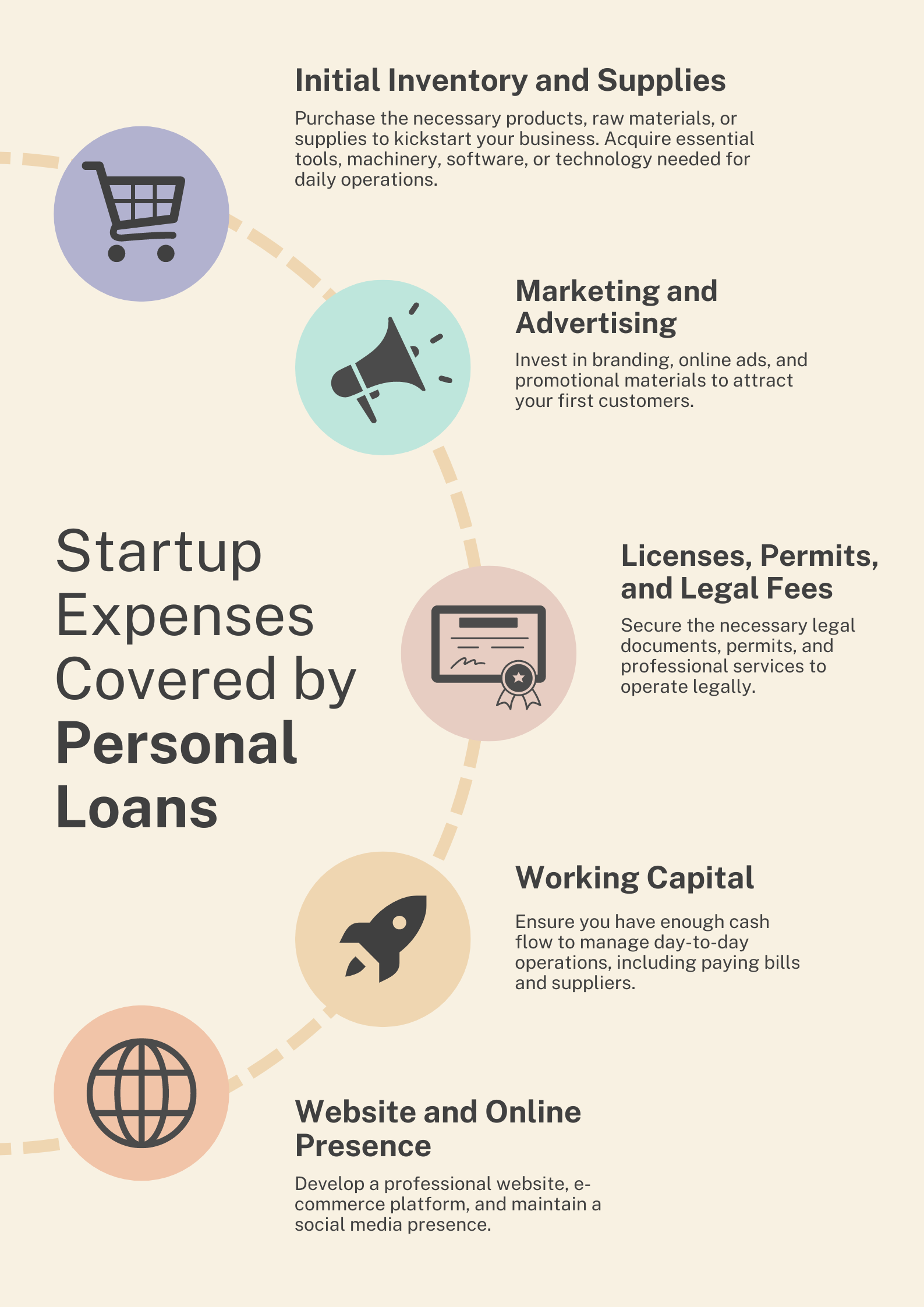
Common Startup Business Expenses That Can Be Covered by Personal Loans
Entrepreneurs can use personal loans to cover a range of startup costs, including:
- Purchasing Inventory: For retail businesses, acquiring initial stock is essential. A personal loan can help cover this cost before sales revenue starts flowing in.
- Expanding Operations: Personal loans can be used to lease office or retail space, buy furniture, or even hire additional staff as your business grows.
- Marketing and Advertising Costs: A solid marketing plan is key to building brand awareness and attracting customers. Personal loans can finance online ads, social media campaigns, or traditional methods like billboards.
- Emergency Fund for Business Continuity: An emergency fund can help businesses navigate unexpected setbacks, such as equipment breakdowns or short-term cash flow issues.
Digido: Fast Online Loans Without Collateral
Digido offers fast, online personal loans without collateral, making it a great option for small business owners in the Philippines. With Digido, entrepreneurs can apply for loans of up to PHP 25,000 and receive quick approval and disbursement—this can be a game-changer for businesses in urgent need of funding.

Benefits of Using Digido for New Small Businesses
- Simple Application Process: The application process is entirely online, allowing business owners to apply from the comfort of their home or office.
- Quick Disbursement of Funds: Once the loan is approved, funds are quickly disbursed, helping business owners meet their immediate financial needs.
- No Collateral: Digido’s loans are unsecured, meaning there is no need to pledge any property or assets as collateral. No guarantor needed.
- Interest-Free First Loan: First loan with 0% interest
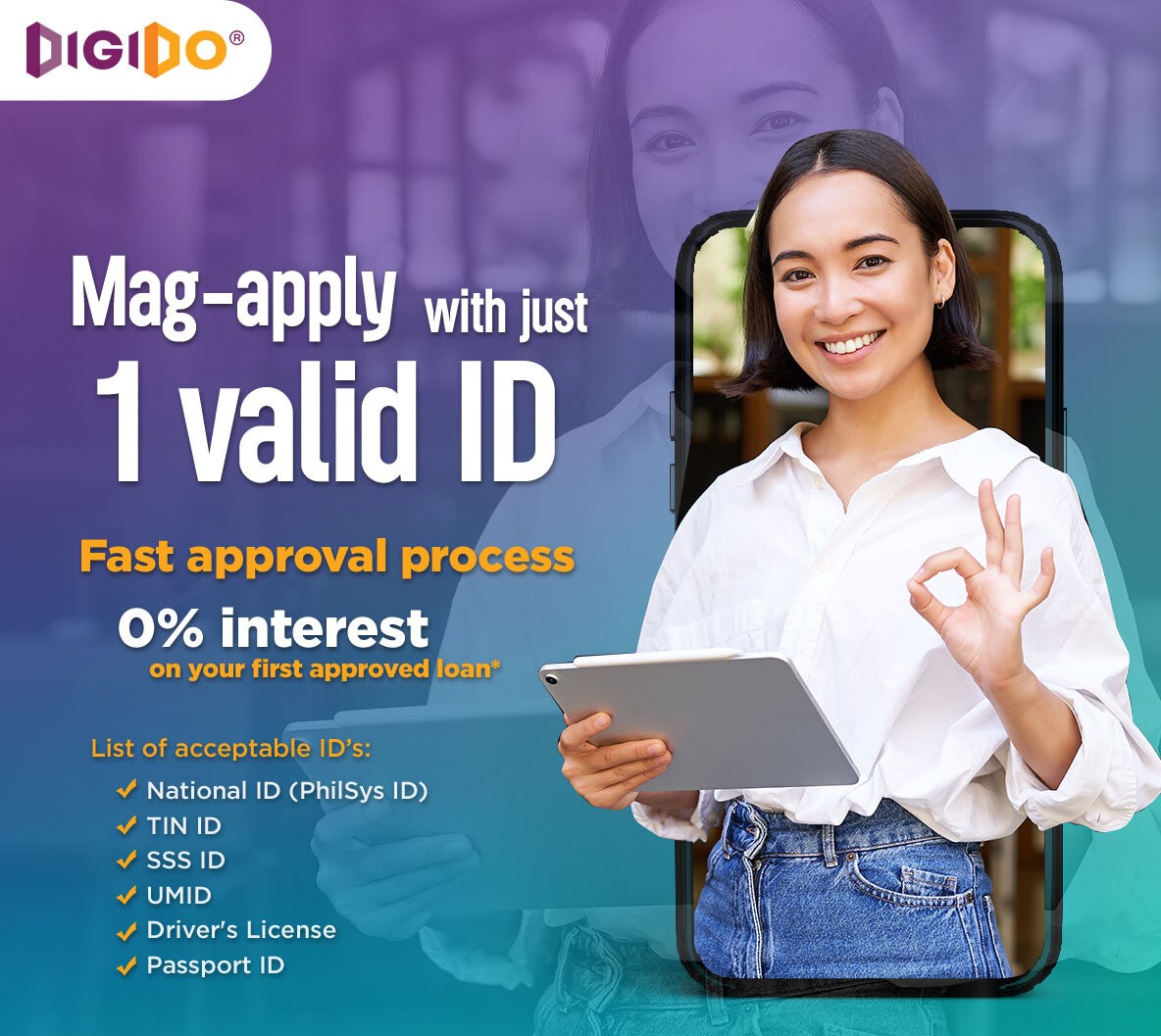
- Minimal documentation: We only require 1 government valid ID
- SEC-licensed online lender: Holding both SEC Registration and an official Certificate of Authority
Apply for a Digido loan right now and get funds to your bank account in 15 minutes! Calculate your pre-approved loan amount:
* Interest payments are approximate. The final loan amount and interest rate must be confirmed in your loan agreement after loan approval.
Steps to Get a Loan for a Startup Without Collateral
To begin with, you need to choose the right lending organisation. Researching the terms, interest rates, and approval processes of different loan providers is essential. It’s important to select a provider that fits your business needs and has a solid reputation for reliability.
Step-by-Step Application Process with Digido
Borrowing from Digido is quick and easy. Below is a detailed guide on how it works:
Step 1: Visit the Digido Website or Download the Mobile App
First, you need to access the Digido platform by either visiting our website at digido.ph or by downloading our mobile app. The app is available for both Android and iOS, making it convenient to apply using any device.
Step 2: Choose the Amount You Need & Create an Account
Use the slider to select the loan amount, enter your phone number, and click “Apply Now.” You’ll then fill in some basic details, such as your name and email address, to create an account. Once registered, a one-time PIN (OTP) will be sent to your mobile phone to verify your identity.
Step 3: Fill the Online Loan Application Form
After creating an account, you’ll need to fill out an online loan application form.
Typically, you’ll be asked to provide:
- Personal information: full name, date of birth, address, and contact information.
- Employment details: job title, employer name, and monthly income.
- Financial information: existing loans or credit history.
- Loan details: the amount you’re requesting and the reason for the loan (e.g., business expenses, emergency fund).
Step 4: Upload Documents
For verification purposes, you’ll be required to upload certain documents, including:
- Identification: a valid government ID such as a passport, driver’s license, TIN ID, national ID, or UMID.
- Proof of income: Proof of income is not required. But It will help if you can provide supporting documents such as a payslip, COE, ITR, business ID, DTI (if self-employed or with a business).
- Photo/Selfie: You may also be required to upload a recent photo or selfie for identity verification purposes.
- Bank account info: you’ll need to provide your bank details for loan disbursement.
Step 5: Choose the Most Convenient Way to Get Your Money
Digido partners with major financial services to make receiving and repaying your loan easy. After completing the form, choose how you’d like to receive the money—via a bank account, e-wallet, or remittance center. If you choose bank transfer, simply provide your account details.
Step 6: Approval
Once you’ve submitted your application, we’ll assess your creditworthiness and review your personal and financial information. In most cases, the loan is approved within 30 minutes. Missing or incorrect information, such as an ID, or technical problems in banking systems can slow down the review process.
Step 7: Sign the Contract with Digido and Agree to the Loan Terms Online
You’ll receive a confirmation code on your phone. After signing the agreement, the loan will be transferred to you immediately.
Apply nowWhat to Expect After Applying: Disbursement and Repayment
Once approved, you can expect quick disbursement of the loan amount. Repayment terms may vary, so it’s essential to plan ahead and make timely payments to avoid penalties.
Disbursement of Funds.
If approved, the loan amount will be deposited directly into your designated bank account or e-wallet immediately. You’ll receive a notification via email or SMS once the funds are transferred.
Repayment Process.
Repayment terms are set according to the loan agreement. Digido offers flexible repayment options, clearly outlined when you take out the loan. You can repay via bank transfer, online payment gateways, or other methods offered by Digido.
This simple, digital-first approach to loan applications makes Digido an ideal choice for startup business owners seeking fast, no-collateral loans.
Learn Where to Get
Best Personal loans in the Philippines
What Start-Up Entrepreneurs Need to Know Before Taking a Loan
- Interest Rates and Fees
Interest rates on personal loans are typically higher than those for business loans, especially if no collateral is involved. It’s essential to compare the rates and understand how much you’ll pay over the loan period. Lower interest rates make the loan more affordable in the long run. Be mindful of additional costs like processing fees, administrative charges, and penalties for early repayment.
- Repayment Terms
While most personal loans offer flexible repayment terms, borrowers should ensure they can manage the monthly payments without putting too much strain on their business’s cash flow.
- Potential Risks and How to Mitigate Them
Taking out a loan always carries risks. Business owners need a solid repayment plan and an emergency fund to avoid defaulting if things take an unexpected turn.

When Personal Loans Might Not Be the Best Option for Startups
In certain cases, personal loans may not be ideal, particularly if the loan amount required is large or if the entrepreneur is looking for long-term financing.
Additionally, personal loans tend to have higher interest rates compared to business loans, which can strain cash flow over time.
Here are a few scenarios when personal loans might not be the best option for startups:
- High Loan Amounts Required: Personal loans usually have lower borrowing limits compared to business loans. If your startup requires a substantial amount of capital for large-scale operations, personal loans may not provide sufficient funding.
- Higher Interest Rates: Personal loans often come with higher interest rates compared to business loans, especially if they are unsecured. This can lead to increased costs over time, straining your startup’s cash flow.
- Long-Term Financing Needs: If your startup requires long-term financing, personal loans may not be the ideal choice due to their shorter repayment terms. Business loans typically offer more favorable long-term repayment plans.
- Impact on Personal Credit: Since personal loans are tied to your individual credit, any default or late payments could negatively affect your personal credit score, which may impact future personal or business financing opportunities.
- Limited Tax Benefits: Business loans often offer tax advantages, such as the ability to deduct interest payments as a business expense. Personal loans do not offer the same benefits, making them less advantageous from a tax perspective.
Learn more:
Top 10 Passive Income Streams in the Philippines
Alternative Financing Options for New Businesses in the Philippines
Aside from personal loans, there are several financing options available to entrepreneurs in the Philippines. Some business models may find these alternatives more suitable or beneficial depending on their circumstances.
- Self-Financing
Many entrepreneurs start their businesses using personal savings, a method known as bootstrapping. While this approach avoids taking on debt, it carries the risk of depleting your savings. Although many success stories arise from self-financing, the failures—where entrepreneurs are left with no savings—are less often shared. However, self-financing allows you to retain full control over your business and avoid interest payments.
| Pros | Cons |
|---|---|
| No debt or interest payments | |
| Full control of your business | Limited capital for growth |
- Financing from Friends and Family
Many startups raise capital by borrowing from friends or family, especially when traditional lenders are unavailable. This option can be advantageous as friends and family often expect little or no return and are more interested in supporting your success. These loans are often informal, with flexible terms, but it’s important to formalize the agreement to prevent misunderstandings.
| Pros | Cons |
|---|---|
| Faster access to funds | Risk of damaging personal relationships if the loan isn’t repaid |
| Lower or no interest rates |
- Crowdfunding
Platforms like Kickstarter, GoFundMe, and the Philippines-based Spark Project enable entrepreneurs to raise funds from the public. This method works best for businesses with innovative products or services that can attract public interest. Everyday Filipinos can support your business, usually in exchange for rewards, such as early access to products or special gifts. However, the amount of money you can raise through crowdfunding is limited, and many campaigns are unsuccessful.
| Pros | Cons |
|---|---|
| No need for collateral | Success depends on public interest |
| You retain your intellectual property and control of your business | Platform fees may apply |
| Potential for free marketing exposure |
- Small Business Grants
Several government and private organizations offer grants to small businesses in the Philippines to promote innovation and economic growth. Unlike loans, grants don’t need to be repaid, making them highly appealing. However, grants are competitive, and the application process can be challenging.
| Pros | Cons |
|---|---|
| Free money that doesn’t require repayment | Highly competitive |
| Supports business growth | Strict eligibility requirements |
- Asset-Based Financing
Asset-based lending is getting loans for business that are guaranteed with the tangible assets of the business, such as inventory, equipment, or accounts receivable. This method is widespread among companies with valuable assets but unable to secure credit facilities through other conventional means.
| Pros | Cons |
|---|---|
| Larger loan amounts | Risk of losing assets in case of failure to return the loan |
| Lower interest rates compared to unsecured loans |
- Venture Capital
Venture capital firms offer investment to start-ups against equity or partial ownership of the company. These are people who have enough money to invest in a promising startup business. It involves a lot of financial backing, though at times the entrepreneur can lose a degree of control over his business.
| Pros | Cons |
|---|---|
| Large capital available | Loss of ownership and control |
| Mentorship opportunities with investors | Only suitable for high-growth businesses |
- Online loans
Licensed online lenders and microfinance institutions normally grant small loans to poor entrepreneurs and people who do not have access to traditional banking. The loans are useful for micro and small businesses seeking a minimum amount of capital to put into operation.
| Pros | Cons |
| Accessible to low-income entrepreneurs | Relatively small loan limits |
| Quick disbursement without collateral | May have interest rates that are high |
Learn How to Get
⏰ Fast Loan in 15 Minutes at 0% interest
Conclusion: Is a Personal Loan the Best Startup Business Loan for You?
Personal loans are easier and sometimes faster to process, so they work well for the entrepreneur who needs money desperately or is in no position to fulfill the demands that come with business loans. This shouldn’t be suitable for a big venture or if the financing need is for a long time. Business owners can thus make up their minds on whether to go for a personal loan as a preference for their start-up by weighing these two aspects of pros and cons.
FAQ
-
What's the maximum I can borrow through a personal loan to invest in my business?The maximum loan amount depends on the lender. With Digido, you can borrow up to PHP 25,000 — perfect for small business start-up needs like purchasing inventory or marketing expenses.
-
Are personal loans suitable for all kinds of startups?Personal loans are typically most suitable for low capital needs, such as online shops or services-based businesses. And, in all likelihood, they will not be suitable for bigger ventures that require huge investments in infrastructure and equipment.
-
Can I use a personal loan to finance the working capital of my business?Yes, personal loans offer flexibility in how the money can be used; that is, they may be utilized to meet day-to-day operating expenses, payroll, and rent. This will help you for the initial few days of managing your business's cash flow.
-
How long does it take to get approved for a startup business loan without collateral in the Philippines?With lenders such as Digido, the process can take much less time—approvals are commonplace within 30 minutes. In other cases, particularly with traditional banks or larger loan amounts, the approval process can take a day or two or even longer, depending on the required documentation and the complexity of the loan application.
-
Are collateral requirements needed for personal loans?No, personal loans are usually free of collateral. Every Filipino can apply for it—even if they do not have assets to put up as security.
-
How can I improve my prospects for loan approval?To increase your chances of approval for both a personal loan or a startup business loan without collateral in the Philippines, it's important to have a good credit score, provide complete and accurate documentation, and choose an amount that suits your financial profile. Having a steady income also helps.
-
What are the requirements for acquiring a startup business loan in the Philippines?The most common documents required when applying for new business loans include a government-issued ID, proof of income (like a recent payslip or employment contract), and your bank account details. Some lenders may ask for additional documentation depending on your financial history.
-
Am I able to pay the loan back before the due date?Most lenders, including Digido, allow early repayment of loans. However, some may charge an early repayment fee, so it’s essential to check the terms and conditions of your loan agreement.
-
What are the effects of delaying payment on my personal loan?Missing a loan repayment can result in penalties, higher interest rates, or damage to your credit score. Make sure to contact us at (02) 8876 84 84 immediately if you anticipate any issues with payment, so we can discuss alternative arrangements.

Authors

Digido Reviews
-
 AngelaDigido’s loan was perfect for my new business needs. It only took 5 minutes to get approved, and I had the funds instantly. Quick, easy, and exactly what I needed!5
 -
CamilleI couldn’t believe how simple it was to apply for a loan with Digido when borrowing for the second time, and the amount was already much higher. I received a ₱25,000 loan for my startup business. The process was super fast!5
-
DanielThis is the best loan app I’ve tried! The approval was so quick, and I didn’t even have to leave my house. Everything was done online, and the money arrived in minutes!5
-
MariaI was able to get a loan from Digido for my startup business with just one document. No delays, just fast service when you need it most.4
Download our app
- Borrowing 24/7
- Approval rate over 90%
- 1 Valid ID