Ready to build a House? What is the Best Month to Start Building a House in the Philippines




The Philippine property market is witnessing substantial growth driven by a robust economy, increasing demand for affordable housing, rising urbanization, and a growing middle class.
When examining various housing types, condominiums saw the most significant yearly price increase, rising by 10.6% (1), in the second quarter of 2024. Therefore, building a house now can be a worthwhile investment of time and energy for the future. You can calculate the costs of construction work, building materials, and additional expenses. However, one factor that can significantly alter your plans if overlooked is the season.
Let’s observe the specifics of each period regarding the commencement of home construction in the Philippines.
- Only 1 valid ID is needed to apply
- Fast approval in 5 minutes
- First loan with 0% interest rate *

(*) Digido Тerms and Conditions Apply
Factors Influencing the Best Month to Build a House
Different factors can evaluate the suitability of a particular season for construction. It is not feasible to declare one season or month the best in all respects for building a house. Therefore, it is essential to select the optimal period for your project, carefully considering each factor involved in construction planning.
1. Seasons in the Philippines
The Philippines experiences several seasons, each presenting different house-building conditions.
☀️ Dry Season (November to April)
The dry season usually spans from November to April and is divided into a remarkable dry period (November to February) and a hot, dry period (March to April). In many respects, this is the best time to build a house. Let’s delve into its advantages.
| Factor | Pros |
|---|---|
| Weather | The dry season experiences less rainfall, which minimizes the risk of delays caused by weather-related issues. This allows construction crews to work more efficiently. |
| Materials | During the dry months, construction materials are generally more readily available. |
| Labor Availability | Many construction workers prefer to work during the dry season, which makes it easier to hire skilled laborers. |
| Cost Efficiency | Constructing during the dry season can result in fewer delays and potential cost overruns, making it a more cost-effective choice. |
Prices of goods traditionally rise during this period, and labor can also be more expensive due to the high demand for construction workers.
🌧 Wet Season (May to October)
The rainy season in the Philippines is characterized by bad weather. During this time, strong winds, storms, and floods can occur in some regions. Considering that such unfavourable weather conditions can severely impact your home construction is essential. Rain and storms can damage load-bearing structures and spoil building materials, making it unsafe for builders to work during heavy rainfall and storms. Storms primarily affect Eastern Visayas, the Bicol region, and northern Luzon during this period.
In such weather, adequate drainage and water management systems are crucial on the construction site. Improper drainage can lead to water accumulation on the site, erosion of materials, and potential damage to the house foundation.
Besides, it would help if you remembered about safety measures. Wet surfaces increase workers’ risk of accidents, such as slips and falls.
2. Availability of Labor
Labor costs are estimated to account for 20 to 40% of the total budget for a construction project. To calculate upcoming labor costs, remember that construction workers typically work 8-hour shifts five days a week in the Philippines, totalling 40 hours per week per worker. They earn an average of 55.50 to 100.50 Php per hour, resulting in a weekly wage of 2,000 to 4,000 Php per worker. Labor costs in urban areas might be elevated due to greater demand and a higher cost of living.
It’s essential to consider the season during which the work will be conducted, as many workers prefer to work during the cool, dry season. Favorable weather conditions from November to February enhance work efficiency and help reduce labor costs, as tasks can be completed more promptly. However, December, for example, often includes many days off. This brings us to another important consideration when planning a builder’s schedule: national holidays and weekends.
📆 Consider National Holidays when you Start Building
There are 18 officially recognized public holidays in the Philippines, categorized into two types: regular and special non-working holidays. During regular holidays, workers receive a paid day off and are entitled to double pay if they are called in to work. If a statutory holiday falls on a weekend, workers are typically granted an extra day off, usually on the first working day following the holiday.
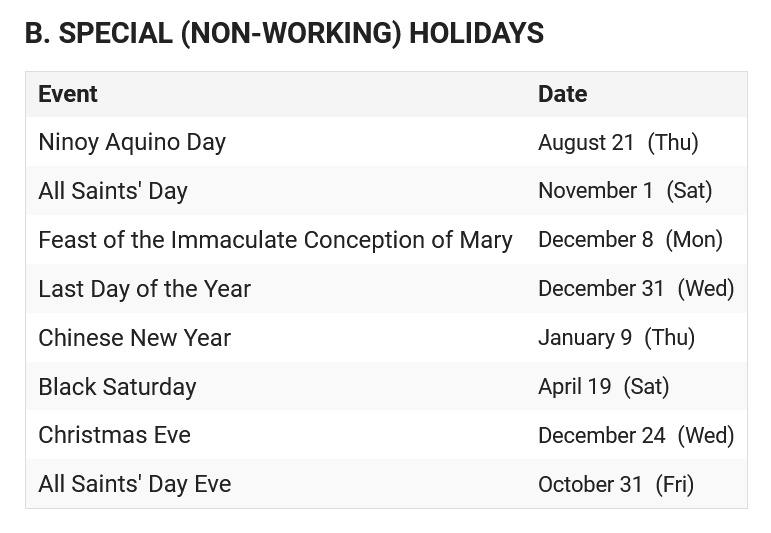
The Philippines also observes special non-working holidays, during which employees receive a day off but are not entitled to pay. Employees who work on such holidays are entitled to a 30% increase in their salary (2).
| Holiday | Regular Holidays | Special Holidays |
|---|---|---|
| Labor Conditions | Employees receive paid days off | Employees take days off without pay during special holidays |
| Labor Pay | Employees who work on regular holidays receive double wages | Employees who work on special holidays earn a 30% salary increase |
There are nine annual regular holidays in 2025, some overlapping with international holidays:

Below are the so-called special holidays that are extremely important to consider. Special Non-Working holidays for the next year are given below:
Learn more
All About Holiday Pay Computation in the Philippines
3. Material Costs and Availability
The demand for construction materials peaks during the hot, dry season from March to April, driven by customers’ desire to prepare before the weather turns unfavorable. This increased demand can lead to shortages, which in turn causes further price hikes. During this hot, dry season, timing is crucial. To save money, you can schedule construction work at the beginning or end of the season when demand is slightly lower.
Conversely, during the rainy season, from May to October, the demand for construction services generally decreases, as many clients prefer to postpone their projects until more favorable weather conditions return. This reduced demand may benefit those willing to take on work during the rainy season, potentially leading to lower material prices. However, it’s important to remember that if you plan to build a house in a remote area, transporting building materials may be challenging due to inclement weather.
Savvy customers can take advantage of the post-holiday season in January in the cooler, dry months. For some customers, this is the best month to build a house in the Philippines. Many suppliers, eager to kick off the New Year with solid sales, may offer promotions and discounts on building materials. The post-holiday period can be an excellent opportunity for budget-conscious individuals to secure great deals without compromising material quality.
Learn about
Build Now Pay Later in the Philippines: Types and Requirements
Best Months Recommended to Build a House
Let’s summarize the information above and determine the best month to start building a house in the Philippines.
Optimal Months: December to March
The cool, dry period provides clients with a favorable construction environment that balances cost and convenience. The absence of the scorching sun and the threat of heavy rains allows contractors to embark on projects with peace of mind, minimizing potential disruptions and ensuring quality results.
Considerations for Building in Transitional Months
Unpredictable weather, sudden downpours, and occasional typhoons mark the rainy season in the Philippines. Undertaking construction work during this time may seem counterintuitive, given the risks involved. However, discerning customers should weigh both the risks and benefits. The primary challenge during the rainy season is the unpredictability of the weather, which can disrupt construction schedules and lead to delays and complications. Conversely, this season often sees a decrease in demand for construction services, as many customers and homeowners choose to postpone their projects until more favorable conditions return.
The transitional months between the hot and wet seasons — April and October — merit special consideration. This drop in demand can be advantageous for those willing to undertake projects during this period. Contractors may have greater availability, and material prices may decrease due to reduced demand.
Monthly Breakdown: Pros and Cons:
| Season | Advantages | Disadvantages |
|---|---|---|
| November to April (Dry season) |
|
|
| May to October (Wet season) |
|
|
Learn How to Get
Housing Loan for Renovation: The Optimal Home Improvement Loans
Tips for Successful Building Projects
👷♂️ Perform constant weather monitoring:
- Study the weather forecasts.
- Be ready to make emergency changes depending on weather conditions.
👷♂️ Ensure the safety of building materials and workers:
- Plan shelter and storage in advance.
- Discuss safety protocols for weather hazards.
👷♂️ Provide permanent oversight of construction progress:
- Establish reporting procedures.
- Choose a communication format for urgent tasks.

Learn more
Understanding Estate Tax Philippines: A Complete Guide for Filipino Inheritors
Conclusion
Choosing the right time to build a house in the Philippines is crucial for a successful construction project. The dry season, particularly from December to March, is the most favorable due to its predictable weather conditions, which minimize delays and enhance construction efficiency. During these months, builders can benefit from lower risks associated with rain and storms, access to skilled labor, and a more comprehensive selection of construction materials.
Conversely, the wet season from May to October presents its own challenges with unpredictable weather but may offer opportunities for cost savings on materials and labor due to decreased demand. Careful planning and consideration of local conditions, labor availability, and material costs are essential in deciding when to commence construction. By strategically selecting the timing of their projects, homeowners can optimize their investments and ensure a smoother building experience.
FAQ
-
How can the rainy season affect the home-building process?Building a house during the rainy season may be unsafe, especially in regions prone to typhoons and heavy rainfall. Water can erode the foundation of the building, and without proper protection, building materials may deteriorate and become unusable.
-
How far in advance should you find a house contractor/construction company?It's advisable to start looking for a construction crew and sourcing materials a few months before the construction begins.
-
What factors should be considered when choosing the best month to build a house?Key factors include weather conditions, labor and building materials availability, and any extended national holidays that might impact the timeline.
-
What is the best month to start building a house in the Philippines?Based on fundamental indicators, January might be considered the best month to start building a house.
-
How do I pay a full-time construction employee on January 1st?January 1st is recognized as a paid day off, compensated at the standard rate. If he works that day, he receives double pay.

Authors


Download our app
- Borrowing 24/7
- Approval rate over 90%
- 1 Valid ID